
Owner-Led Shop Visibility: What the Owner Needs to Know Without Interrupting the Floor
The owner should not need to interrupt the floor to understand the shop. Visibility should come from the job record.
TL;DR
Owner-led shops run on attention.
When the owner has to interrupt people to understand jobs, the business is paying twice: once in the owner's time and once in the floor's lost focus.
The answer is not a prettier dashboard. The answer is a job record that shows readiness, blockers, QC, customer status, and invoice readiness without a verbal hunt.
AIURION's current Production matrix concentrates released-job due state, phase health, blocker context, quantities, owners, QC state, and next action. Orders and Invoices carry the commercial ends of the job. That is useful operating visibility, but it is not a claim that every owner question appears on one dashboard card.
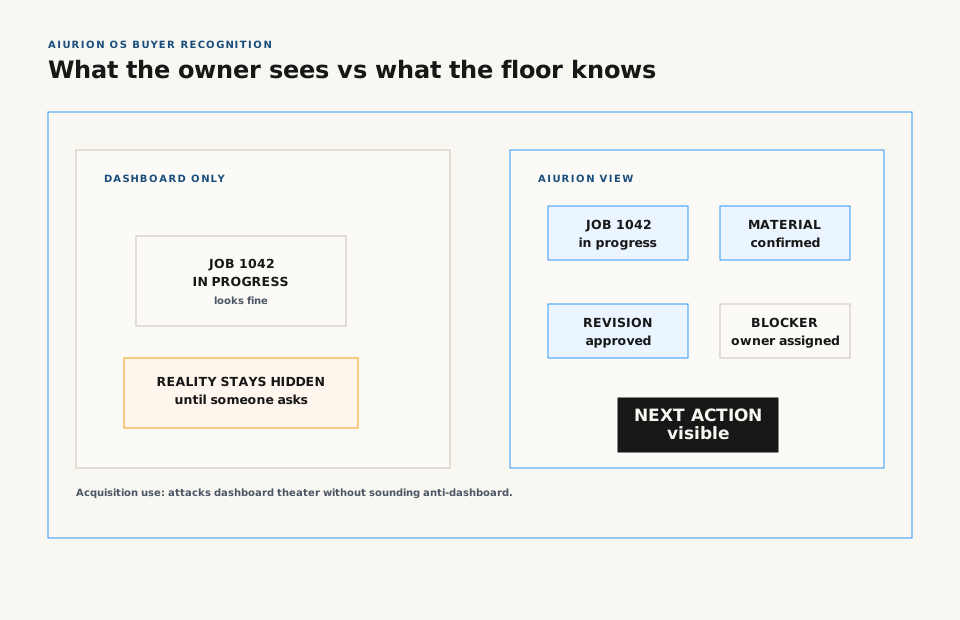
Diagram: A status label is not visibility unless it carries the reason behind the state.
Skip Ahead
- The interruption tax
- Yesterday's interruption ledger
- What owners need to know
- What not to measure alone
- Where AIURION OS fits
- Your next move
The Interruption Tax
In small and mid-sized shops, the owner often becomes the integration layer.
They ask:
- where is the job?
- why is it late?
- what did the customer ask?
- is QC done?
- can we ship?
- can we invoice?
Each question may be reasonable. The pattern is expensive.
If the owner needs a person to answer every status question, the system is not carrying the job story.
NIST describes the manufacturing digital thread as connected information across design, manufacturing, and product support, and identifies gaps in those flows as a barrier to using information across the enterprise [S1]. In an owner-led shop, the interruption ledger below shows exactly where those gaps become human work.
Yesterday's Interruption Ledger
Log actual interruptions for several days before estimating ROI. Use one row per question.
| Time | Question | Person Interrupted | Direct Minutes | Sources Checked | Decision / Outcome |
|---|---|---|---|---|---|
| 8:07 AM | Can J-2417 start? | Production lead | 7 | Traveler material tab + vendor email | Hold setup until the cert arrives |
| 9:42 AM | Where is operation 30? | Mill operator | 5 | Traveler routing + machine board | Move assignment after spindle downtime is confirmed |
| 11:18 AM | Can we promise Friday? | Scheduler | 9 | Due date + material requirement + QC plan | Customer update remains conditional on material receipt |
| 2:05 PM | Can J-2399 ship? | Inspector | 6 | QC run + packaging phase | Keep packaging locked until one open check is dispositioned |
| 4:10 PM | Can the office invoice? | Office manager | 8 | Order shipment state + invoice list | Create draft after shipment is recorded |
This illustrative day contains 35 direct interruption minutes. Do not annualize that number as a universal savings claim. Repeat the ledger with your own team, then separate:
- questions the current record could answer without interruption;
- questions caused by missing or stale data;
- decisions that appropriately require a person;
- questions that should never have reached the owner.
The best improvement target is the repeated, answerable question—not the one difficult exception that still needs judgment.
What Owners Need To Know
Owner visibility should focus on decisions:
| Decision | Required Visibility |
|---|---|
| Can we promise this date? | capacity, material, outside process, current load |
| Can this job start? | release readiness and missing context |
| Why is this blocked? | blocker type, owner, next action |
| What should we tell the customer? | verified status and risk |
| Is quality holding the job? | QC requirement and signoff state |
| Can the office invoice? | shipment and closeout readiness |
This is different from watching utilization alone. Utilization without context can hide the work that should not have started.
What Not To Measure Alone
Do not measure only:
- machine hours
- number of open jobs
- late jobs
- labor utilization
- revenue booked
Those metrics matter, but they do not explain what to do next.
The owner needs operating visibility, not just performance reporting.
Where AIURION OS Fits
AIURION OS gives owner-led shops a way to inspect released work without making the owner the first message bus.
The job record should show:
- quote context
- traveler state
- blocker ownership
- production progress
- QC evidence
- due state, quantities, QC state, and next action in Production
- shipment and invoice state through Orders and Invoices
The assistant can summarize current work and blockers from available workspace context. It does not replace the human who updates a requirement, approves release, commits a date, dispositions QC, or marks an invoice paid.
For software category comparison, see CNC shop management software. For live production visibility, see job shop production tracking. If visibility still depends on interrupting people, request a focused pilot.
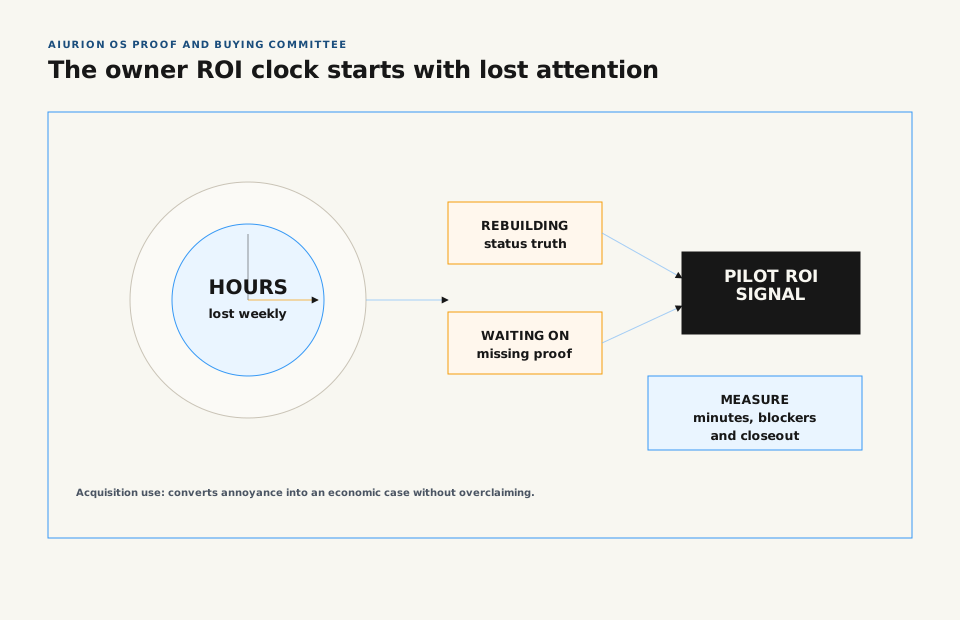
Diagram: Time spent reconstructing job truth is an owner-level cost.
Your Next Move
Copy the interruption ledger and run it for five working days. Group repeated questions by missing field, stale field, unclear owner, or legitimate judgment. Use the largest repeated group as the scope of the focused pilot linked above.
References
[S1] NIST - Digital Thread for Smart Manufacturing [Link]