
Production Release Readiness: A Practical Checklist Before Work Hits the Floor
Production release should mean the job is ready to run, not just ready to be pushed forward. Use this checklist to catch missing context before it becomes floor friction.
TL;DR
Production release is one of the most expensive places to be vague.
Once a job hits the floor, missing information becomes interruption, delay, rework, or quiet risk. A release checklist should confirm the minimum facts needed to run the job responsibly: current files, quote assumptions, material, traveler, operation path, QC requirements, outside processes, blockers, and owner.
In AIURION today, a draft traveler can carry part/revision, quantity, customer and PO context, due date, operations, material, tooling, documents, and the QC plan. A human releases it. Release sends the traveler into Production and Scheduling and cannot be undone from the traveler modal, so the pre-release review matters.
Skip Ahead
- What release should mean
- Copy/paste production release checklist
- What to do with exceptions
- Where AIURION OS fits
- Your next move
What Release Should Mean
Release should not mean "someone wants this job to move."
Release should mean the shop has enough evidence to let the floor act.
That evidence includes production instruction, but it also includes context:
- What did the customer ask for?
- Which revision is active?
- What did the quote assume?
- What material and outside process are required?
- What should the operator know before starting?
- What must QC inspect or preserve?
- What risk is still unresolved?
The point is not to delay work. The point is to avoid starting work that is not truly ready.
NIST's current Digital Thread for Manufacturing work describes the communication of product designs into manufacturing and quality activities, plus feedback from those activities to engineering [S1]. Release is the local control point where that information becomes executable work.
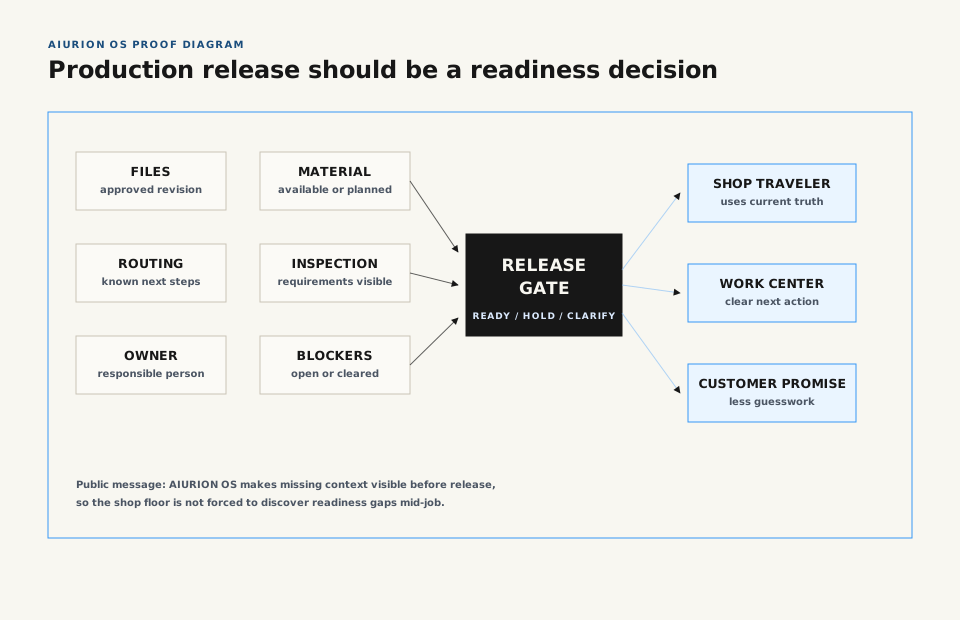
Diagram: Release should happen from readiness, not hope.
Copy/Paste Production Release Checklist
Copy this into the job review, traveler note, or controlled release procedure. Tailor it to the contract and process; the checklist is an operating artifact, not a universal regulatory requirement.
- [ ] Job identity: order number, customer, part number/description, quantity, and due date match the accepted work.
- [ ] Commercial basis: approved quote/version, customer PO, delivery basis, exclusions, and accepted clarifications are identifiable.
- [ ] Revision: drawing, model, PO, specifications, and traveler show the approved revision or an approved disposition explains the difference.
- [ ] Source files: current drawings, models, specifications, and customer documents are attached or linked; superseded files are clearly identified.
- [ ] Quote assumptions: material, process, setup, tooling, outside process, inspection, lead time, and customer-supplied items that shaped the price are visible.
- [ ] Material requirements: every required material row exists with owner, status, notes/ETA, and required cert context.
- [ ] Material gate: active material rows are Ready or N/A. If the team releases early for planning visibility, the exception is documented and the Material gate remains not ready.
- [ ] Tooling requirements: tools, fixtures, gauges, consumables, and acquisition owners are recorded.
- [ ] Programming: required CAM/program files, revision/reference, verification expectation, and owner are known.
- [ ] Routing: operation sequence, workcenters, machines, and inspection-required operations are defined.
- [ ] Setup: fixture, program, tools, datum strategy, setup notes, and prerequisite readiness are coherent.
- [ ] Operator context: each operation has enough instruction to execute without reconstructing the plan from email.
- [ ] Outside processing: vendor/process, send and return conditions, PO/approval, lead time, and required certification are recorded in notes/documents where applicable.
- [ ] QC plan: characteristics, method, acceptance basis, measurements/reporting, inspector ownership, and any FAI or customer evidence are defined.
- [ ] Documents: material certs, process certs, approved deviations, programs, setup sheets, and customer deliverables have an owner and storage location.
- [ ] Owners: unresolved requirement, phase, operation, and approval actions have one accountable person.
- [ ] Exceptions: each open issue has a blocking fact, evidence, disposition, next action, and review time.
- [ ] Permission/access: assigned users can reach the files and records needed for their work.
- [ ] Closeout basis: the team knows what proves QC complete, packaging/shipment ready, and the order ready to promote to invoice.
- [ ] Release approval: the authorized person reviewed the record and intentionally selected Release to Production.
Do not check a box because the information probably exists. Record where the evidence lives. Structural routing edits are planned while the traveler is draft; after release, the traveler becomes the execution surface. Release cannot be undone from the current modal.
What To Do With Exceptions
Not every job will be perfectly green.
The key is to avoid silent exceptions.
If material is late but planning can continue, record the exception without marking Material ready; the current Production gates still prevent Setup until Material, Tooling, and Programming are ready. If QC requirements are still being clarified, do not pretend they are complete. If the customer has not confirmed a revision, hold the release or document the limited, unaffected planning scope with a named owner.
Teams can use three pre-release decision labels as an operating convention:
- Hold: missing information makes release irresponsible.
- Conditional release: work can start, but the risk and owner are explicit.
- Clean release: no known missing context blocks responsible work.
These are not three AIURION traveler statuses; they are review outcomes that should be documented before the human release action.
For aerospace work where AS9102C is invoked, the standard establishes requirements for performing and documenting first article inspection and makes clear that those requirements complement customer, statutory, and regulatory requirements [S2]. It does not make this general checklist an aerospace approval record.
Where AIURION OS Fits
AIURION OS gives the reviewer a draft traveler with the core release surfaces:
- quote context
- traveler details
- material and tooling requirement rows
- routing, operation, program, fixture, and setup context
- documents and linked analysis context
- QC plan requirements
- traveler history and release action
That matters because release is not a department. It is a handoff across the business.
The current assistant can discuss available workspace context, but it does not automatically certify this checklist or release the traveler. A responsible user reviews the evidence and commits the release.
Start with paperless shop travelers if the traveler is the weak point. Start with manufacturing operations platform if the whole release path is fragmented. For a real release-readiness pilot, request access here.
Your Next Move
Review the next five jobs waiting to release.
For each one, mark:
- green if all required context is attached
- yellow if the release is conditional
- red if release would push ambiguity to the floor
Then inspect the yellow and red jobs. The repeated missing field is your first process improvement.