
Manufacturing Operating System: What High-Mix Shops Actually Need
A manufacturing operating system is not another dashboard. It is the operating record that lets a shop quote, release, run, inspect, and invoice real work without reconstructing the truth every day.
TL;DR
A manufacturing operating system is the layer that makes the job readable across the whole business.
ERP records commercial transactions. MES tracks execution. QMS protects quality. Spreadsheets fill the gaps. Email carries context that should have been tied to the job. None of that is automatically wrong. The problem is that the shop still has to reconstruct the truth when a customer asks, a job blocks, QC finds an issue, or the office needs to invoice.
AIURION OS is built around a different idea: the shop should operate from a common job record. The quote, traveler, production state, current blockers, traveler history, QC evidence, customer context, invoice readiness, and permission boundary should be connected enough that a responsible person can inspect the truth without calling three people.
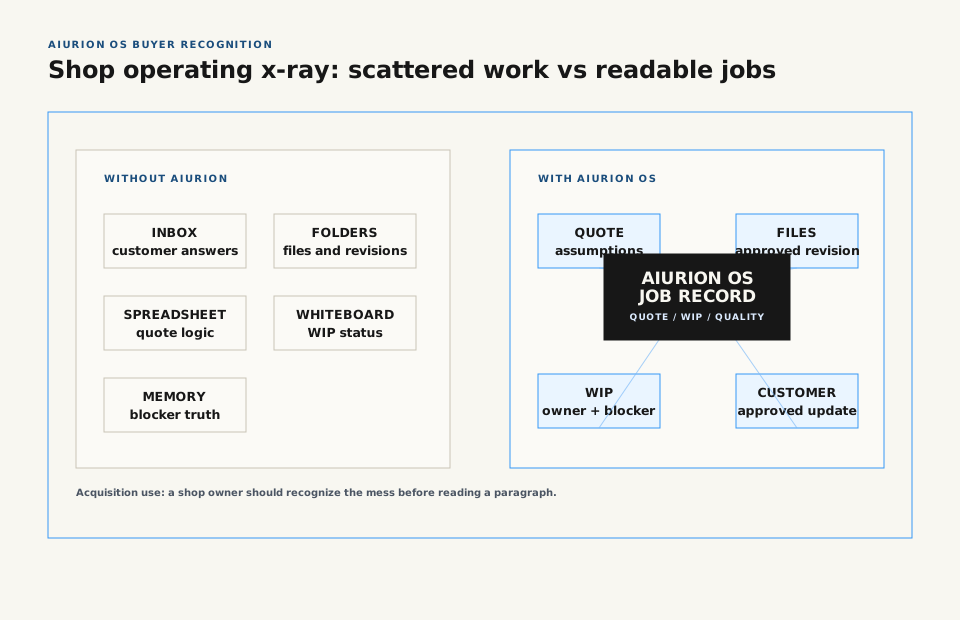
Diagram: Show the shop as it feels today, then show the same work organized around one job record.
Skip Ahead
- What the category means
- Where the old stack breaks
- The practical test
- Where AIURION OS fits
- Your next move
What The Category Means
The phrase "manufacturing operating system" gets used loosely. Sometimes it means a dashboard. Sometimes it means an MES. Sometimes it means a modern ERP with nicer screens.
For a high-mix shop, the useful definition is narrower:
A manufacturing operating system is the connected job record that lets the business quote, release, run, inspect, explain, and invoice work from the same operating truth.
That definition matters because high-mix work is not a clean assembly line. Every job carries its own drawings, revisions, assumptions, material requirements, outside process constraints, inspection requirements, customer promises, and commercial context.
If that context does not move with the job, the shop pays for it later.
| Job Stage | What Has To Survive | What Breaks When It Does Not |
|---|---|---|
| RFQ | files, revision, customer notes, due date | estimating starts from incomplete demand |
| Quote | assumptions, exclusions, pricing logic | production inherits promises it cannot see |
| Release | traveler, route, material, files, checks | the floor starts with partial instruction |
| Production | operation state, blockers, notes, ownership | status becomes a meeting instead of a record |
| QC | requirements, measurements, exceptions, signoff | quality evidence becomes disconnected paperwork |
| Closeout | shipment, customer context, invoice readiness | finished work still waits for business handoff |
This is why a manufacturing operating system is not just "more software." It is a category answer to a specific operating failure: the job story does not survive the business.
Where The Old Stack Breaks
Traditional manufacturing software categories are real. They exist for good reasons.
- ERP helps the business record orders, inventory, purchasing, and financial events.
- MES helps the operation track execution.
- QMS helps control quality records and compliance.
- CRM helps manage customer relationships.
- File systems store drawings, quotes, and attachments.
- Spreadsheets remain flexible when none of the above fit.
The weakness is not that these tools exist. The weakness is that the job still crosses the gaps between them.
ISA-95 is useful here because it names the integration problem between enterprise systems and manufacturing control systems [S1]. NIST's digital-thread work points in a similar direction: manufacturing information becomes more valuable when it can move across lifecycle stages instead of living in isolated artifacts [S2].
For a job shop, the practical version is simple:
Can the shop answer "what is true about this job right now?" without reconstructing the answer from six systems and three people?
If the answer is no, the problem is not only reporting. It is operating structure.
Dashboard tools usually make this worse when they sit on top of fragmented data. They show a cleaner view of an unreliable record. The shop still has to ask whether the quote assumptions were carried into the traveler, whether the blocker is current, whether QC has signed off, and whether the office is allowed to invoice.
A manufacturing operating system should reduce that reconstruction burden. It should not become another place where context goes to die.
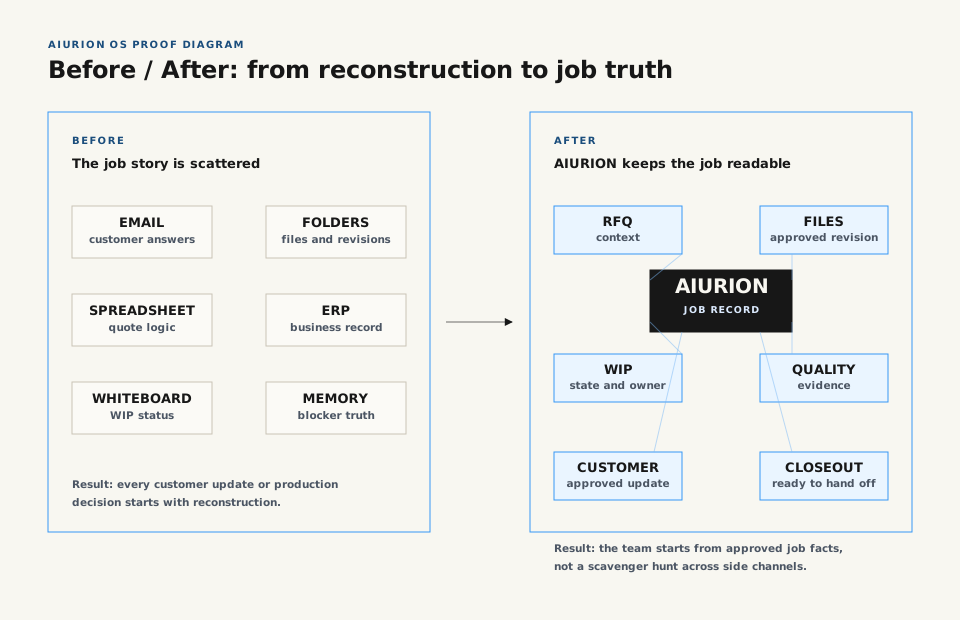
Diagram: Scattered job truth becomes one operating record.
The Practical Test
Take one live job and ask five people the same question:
"What is the current state of this job, and what happens next?"
Ask the estimator, production lead, operator, QC owner, and office/admin owner. Then compare the answers.
If each person answers from a different artifact, the shop does not have an operating system. It has local truths.
The test should expose:
- Whether the approved quote assumptions are visible after release.
- Whether the traveler reflects the active revision and customer requirements.
- Whether blockers have owners and timestamps.
- Whether QC evidence is connected to the job state.
- Whether shipment and invoice readiness are distinct from production completion.
- Whether users only see the job context they are allowed to see.
- Whether a manager can verify the answer without asking for a verbal update.
This is not bureaucracy. It is how a shop avoids avoidable delay.
Deloitte's smart manufacturing research keeps returning to connected data, operational visibility, talent constraints, and disciplined transformation as themes [S3]. The same idea applies in a smaller high-mix environment. You do not need a grand transformation program before you can improve the job record. You need one workflow where the operating truth becomes easier to inspect.
Where AIURION OS Fits
AIURION OS should be considered when the shop's pain is not just "we need an ERP" or "we need AI." The sharper diagnosis is usually:
- quote assumptions disappear before work hits the floor
- travelers carry instructions but not enough context
- customer status updates require internal detective work
- blockers are discussed but not preserved as operating history
- QC evidence exists but is not part of the live job story
- production completion and invoice readiness are confused
- managers see dashboards but still do not trust the data
AIURION's current workflow connects Reports, Quotes, Orders, Travelers, Production, Scheduling, QC, and Invoices. Intake can begin with a part analysis in Reports or directly in Quotes; there is not a dedicated RFQ module today. The operating value comes from preserving customer context, files, assumptions, execution state, quality evidence, and commercial closeout across those handoffs.
The AI layer becomes more credible only after that record exists. AI can summarize a job, surface a blocker, draft a customer update, or review quote context when it has permissioned access to the underlying work. Without that, it is only summarizing fragments.
This is the soft but important point: AIURION OS is not valuable because it says "AI." It is valuable when it makes the shop easier to operate.
Start with the AIURION OS manufacturing operations overview. If your current software stack cannot preserve the job story from quote to invoice, request a focused pilot around one real workflow.
Your Next Move
Do not begin with a software feature list.
Begin with one job that recently created confusion:
- a quote that production misunderstood
- a traveler that reached the floor incomplete
- a late job with no clear blocker owner
- a QC issue that was hard to reconstruct
- a customer update that required multiple internal messages
- a finished job that still sat before invoice
Map where the truth lived at each step. Then ask whether your current systems made that truth easier or harder to inspect.
That answer will tell you whether you need another tool, or whether you need a manufacturing operating system.